
Using Your Backyard Bounty: Black Sage Pesto
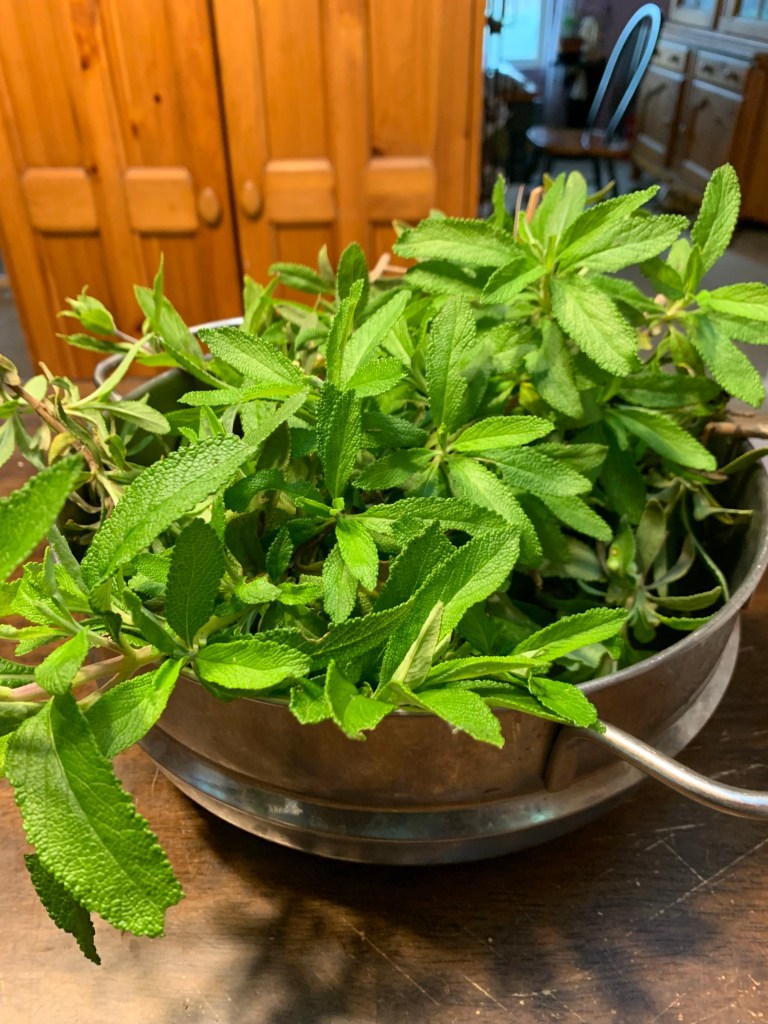
When we first moved to PFR, we were surprised to see tall black sage bushes taking over one section of our front yard–now fondly referred to as the “chaparral zone.” Black sage (Salvia mellifera) is the most common sage in California, growing along the Pacific coast from around San Francisco Bay Area down through Southern California. Native American peoples have used black sage for many purposes. However, I had never really thought about eating sages as more than culinary or medicinal herbs until participating in a California Native Plant Society webinar on edible natives. This gave me the inspiration to create Black Sage Pesto. You can substitute almost any sage (except NOT white sage). All you’ll need is the ingredients, a device to blend them (I used an immersion blender), and pasta or other base (quinoa, rice, or other grains would all work).
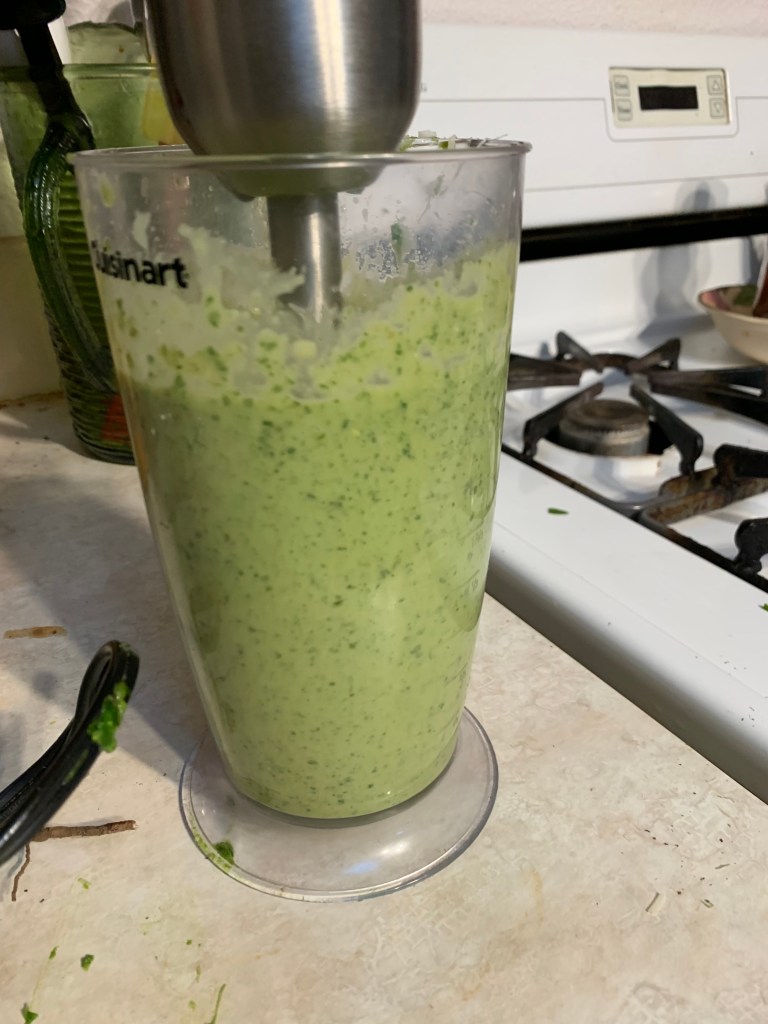
Place the following ingredients in your blending device: 2-3 handfuls of sage leaves, 1 handful of miners lettuce or another mild leafy green, 1 cup oil (I used a combo of olive and avocado), 1/4 cup water, 2 tablespoons minced garlic, salt to taste, 1/2 cup pine nuts (can substitute any other mild flavored nut such as walnuts), 1/2 cup shredded Parmesan cheese, and 1-2 tablespoons balsamic vinegar. Blend to the desired consistency–completely smooth or a little bit chunky. Add to pasta or other base. Top with meat crumbles, if desired.
While black sage is common in coastal California, it is preferable to harvest sage you or a friend have grown rather than foraging in the wild.
Climate-Appropriate Landscape Consultation
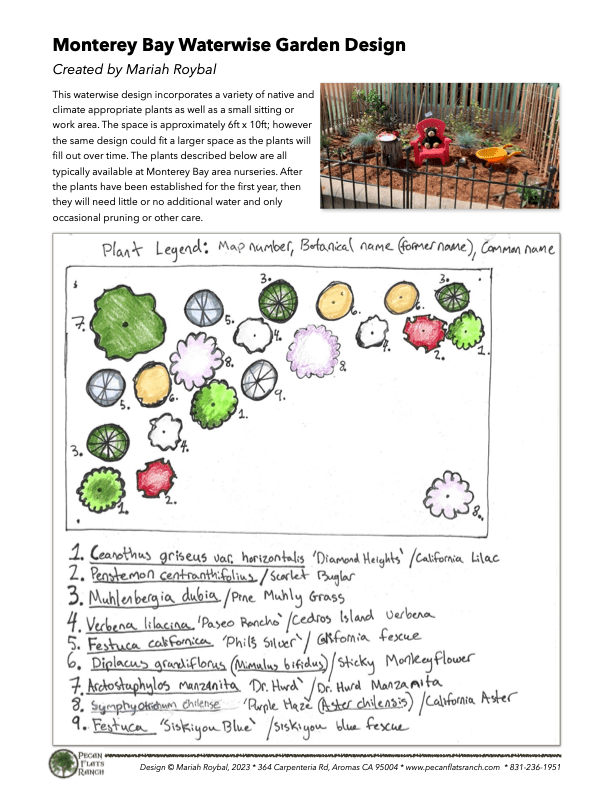
Check out this new water-wise garden design incorporating California native and climate appropriate plants, created by Mariah Roybal! The garden can be scaled up easily, as plants will fill in as they grow. Click here to download a PDF.
 Pecan Flats Ranch